
The Mistake Most People Make First
When homeowners worry about their garage door springs, they almost always walk out to the garage and look for one thing: a visible gap in the coils, or a spring that's obviously snapped in half. It's tempting to treat that as the test, because it's the only sign most people have ever heard of, and it feels definitive — either the spring is broken or it isn't.
The problem is that a visible gap is usually the last stage of failure, not the first. Springs give you warnings for weeks or months before they actually let go, but those warnings show up as changes in sound, movement, and balance — not as something you can simply eyeball from across the garage. If you're only checking for a broken coil, you'll miss every earlier sign, and you'll be the one standing there when it finally goes.
Walk the Checklist
Set aside ten minutes, close the garage door, and go through these one at a time. You don't need tools for most of them.
1. The Manual Balance Test
Disconnect the opener (pull the red release cord) and lift the door by hand, slowly, to about waist height. A door with healthy springs will stay roughly where you leave it, needing only light effort to move. If the door feels heavy, drops on its own, or shoots upward unexpectedly, the springs are no longer carrying their share of the weight. This is the single best early indicator, and it catches problems weeks before a visible break.
2. Coil Spacing (Torsion Springs)
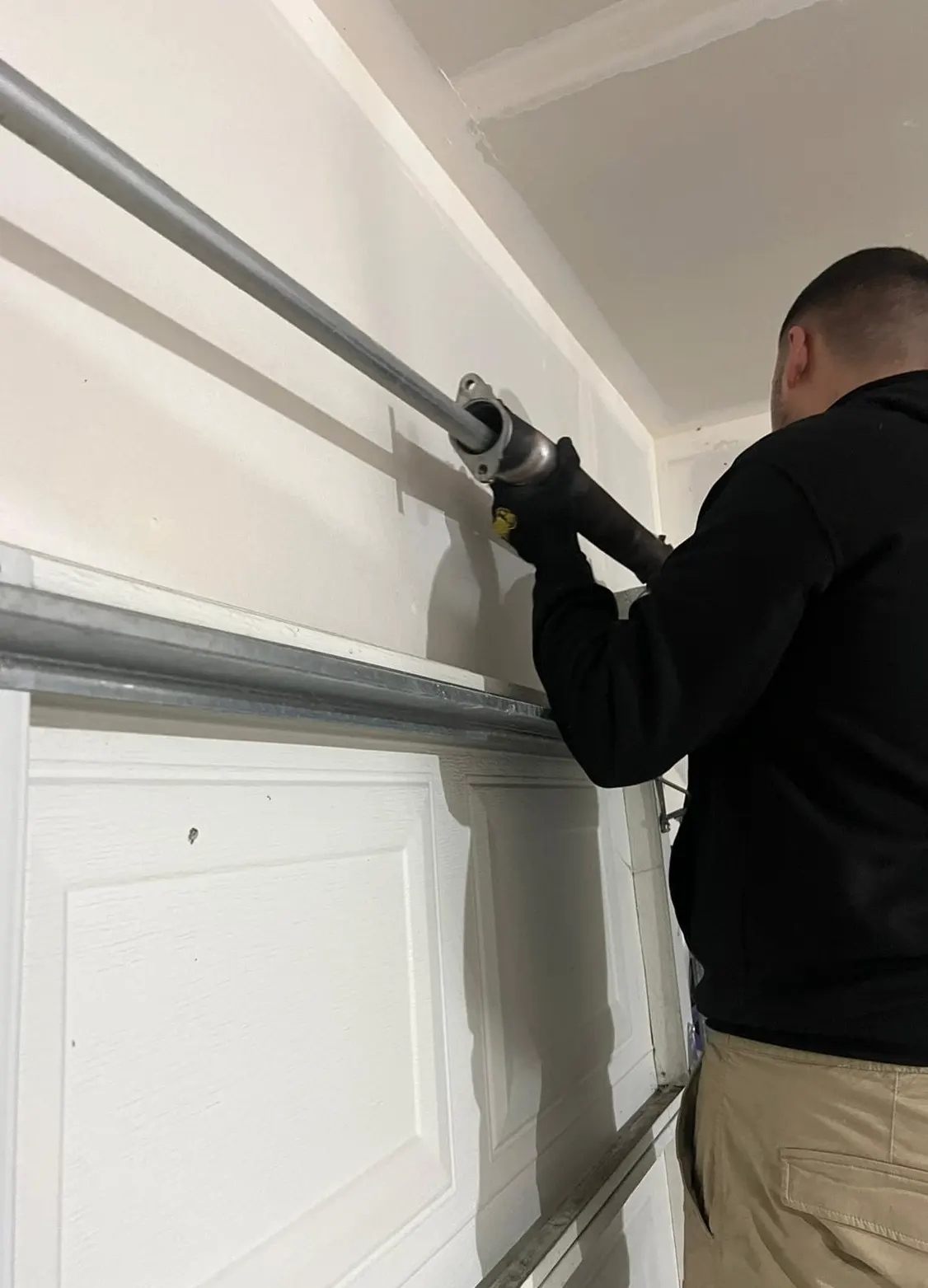
Look at the torsion spring mounted above the door on the horizontal bar. The coils should sit close together with even spacing. A gap of a quarter-inch or more between coils, or coils that look stretched and uneven compared to each other (if you have two), means the spring has lost tension and is nearing the end of its life.
3. Cable Condition (Extension Springs)
If your door uses extension springs (the long springs running along the upper tracks, with cables on each side), check the cables for fraying, individual broken strands, or visible slack when the door is down. Frayed cable under tension is a safety hazard on its own, separate from the spring itself.
4. Opener Strain
Listen to the opener motor as the door runs. A healthy spring takes most of the lifting load, so the opener should sound steady and unhurried. If you notice the motor laboring, grinding, slowing mid-cycle, or the door jerking instead of moving smoothly, the spring is no longer doing its job and the opener is compensating — which wears out the opener faster too.
5. Uneven or Crooked Closing
Watch the door as it closes. If one side reaches the floor before the other, or the door looks visibly tilted at any point in the cycle, it usually means one spring (in a two-spring torsion system) or one extension spring has weakened more than its partner. Mismatched spring tension puts extra strain on the tracks and rollers, so this is worth catching early.
6. New or Louder Noises
Pay attention to any popping, creaking, or metallic scraping sounds during the door's travel that weren't there before. Springs under failing tension often make noise right before they go, especially as temperatures shift between the dry season and winter rains.
7. Rust and Pitting
Run your hand along the spring coils (carefully, with the door closed and opener disconnected) and look for rust spots, pitting, or flaking. Coastal salt air works on exposed metal faster than people expect, and a rusted spring loses strength well before it visually fails. Garages closer to the water, or anywhere dust and salt collect on hardware, tend to see this show up sooner.
8. Age and Daily Cycles
Most springs are rated for around 10,000 open-close cycles, which works out to roughly 7–9 years for a household using the door once or twice a day. If you don't know how old your spring is, check for a date sticker on the coil, or just factor in how long you've owned the house. A spring nearing that cycle count deserves closer attention even if it looks fine today.
9. Missing Safety Cables
For extension spring systems, there should be a safety cable running through the center of each spring. If yours is missing, that's not a wear sign exactly, but it means a sudden break could send spring fragments flying instead of being contained — worth fixing regardless of the spring's current condition.
When to Call Oxnard Garage Door
If you go through this list and find a gap in the coils, a frayed cable, an opener straining to lift the door, or a door that won't hold its position during the balance test, stop using the door and call us. Spring Replacement is one of the most common same-day calls we get, because a failing spring rarely waits for a convenient time to let go, and the stored tension in a torsion or extension spring makes this a job for someone with the right bars and experience, not a DIY fix. We'll also check the cables, drums, and opener while we're there, since a worn spring often puts extra strain on those parts too.
If you noticed any of these warning signs while walking your own garage, give Oxnard Garage Door a call. We serve Oxnard and the surrounding Ventura County communities with same-day spring replacement, so you can get it handled before it becomes a bigger repair.