
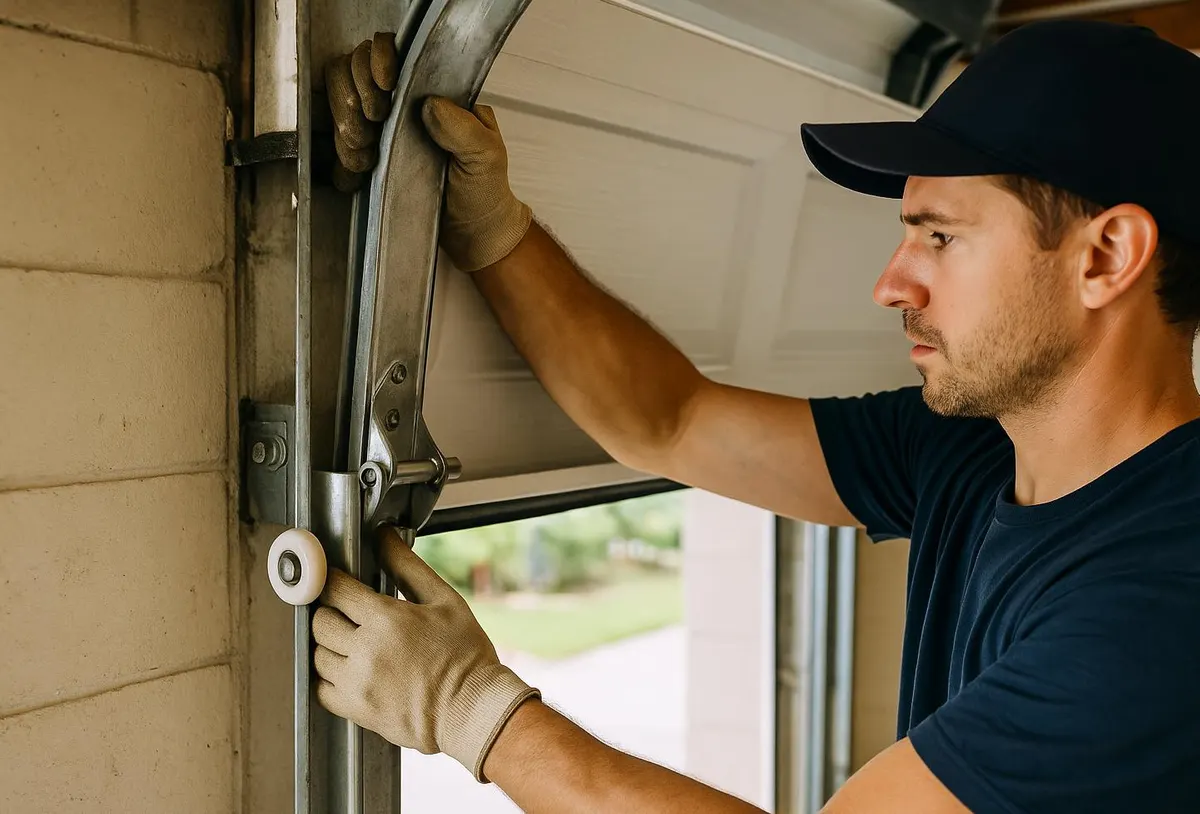
What a Technician Sees on This Call
Right about now, the calls start sounding the same. A homeowner's garage door worked fine all summer, then the first real rain of the season hits and suddenly the door is grinding, sticking halfway up, or the opener is reversing for no clear reason. What's usually going on is months of dry-season buildup meeting moisture for the first time. Fine dust and grit from a long, dry summer settles into the tracks and rollers, and when humidity and rain finally show up, that dust turns into a gritty paste that binds up hardware that was quietly wearing down for months.
Clear Out the Dust Before It Turns to Grime
Ventura County's dry season leaves a layer of fine dust on everything, including the inside of your garage. Before the rain arrives is the easiest time to deal with it.
- Wipe down the tracks with a dry cloth to remove dust and grit before it gets wet and sticky.
- Check rollers for a gray, caked-on buildup rather than a clean, smooth surface.
- Vacuum the bottom seal area, where dust and leaves tend to collect against the floor.
- Avoid spraying household cleaners directly into the tracks; a dry wipe-down and a light dose of garage-door-specific lubricant work better than soap and water.
If your door has been making a dry, scraping sound on dry days, that's often the warning sign before the wet-weather grinding starts.
Check Weatherstripping and Seals
Winter here means real rain, sometimes coming in sideways with wind. The rubber seal along the bottom of the door and the weatherstripping along the sides are what keep water, wind-driven dust, and small pests out of the garage.
- Look for cracking, flattening, or gaps where daylight shows through around the edges of the closed door.
- Press on the bottom seal; if it's stiff and doesn't spring back, it's likely dried out from a summer of sun exposure and needs replacing.
- Replacing worn seals is a relatively low-cost repair, and it's far cheaper than dealing with water damage to stored items or a wet garage floor all winter.
Why This Matters More on Older Homes
A lot of garages in this area have had other retrofit work done over the years, especially earthquake bracing, and it's worth a quick visual check that nothing around the door frame has shifted or left a gap that wasn't there before. A door that latches and seals evenly on both sides is also a door that's less likely to let in wind-driven rain during a winter storm.
Springs Don't Love Temperature Swings
Coastal mornings get noticeably cooler and damper heading into winter, and metal springs respond to that. A spring that's been quietly losing tension over a hot, dry summer can become more noticeable, or even fail, once cooler, damp mornings put more strain on it as the metal contracts slightly.
- Watch for a door that feels heavier than usual when lifted manually, or an opener that strains and makes a louder motor noise than normal.
- A door that doesn't stay in place when raised about halfway by hand is a sign the spring balance is off.
- Springs are under high tension and are not a safe DIY repair; this is one job where it's worth having it done properly rather than guessing.
Test the Opener and Safety Sensors
Winter means more days with the door closed and more use of the opener in low light. This is a good time to confirm the basics are still working:
- Place a block of wood on the ground where the door closes; the door should reverse when it touches the block.
- Check that the photo-eye sensors near the bottom of the tracks are aligned and free of dust or cobwebs, since a knocked-out-of-alignment sensor will cause random reversals, something more common once garages get more foot traffic during rainy weeks.
- If you rely on a battery backup for the opener, confirm it still holds a charge; winter storms occasionally bring brief power outages.
Coastal Salt Air and Hardware
If your home is closer to the coast, salt air speeds up corrosion on hinges, tracks, and exposed bolts year-round, but it's worth a closer look heading into a season of more moisture overall. Light surface rust on hinges or the bottom of the tracks is common and usually manageable with cleaning and lubrication, but flaking rust on structural hardware is worth having checked before it gets worse.
When to Call Oxnard Garage Door
If your door is sticking, reversing unexpectedly, or feels heavy and unbalanced, that's the point to call rather than keep adjusting it yourself. Oxnard Garage Door handles garage door maintenance visits that cover exactly this kind of seasonal check: tracks, rollers, seals, hardware, and spring tension, all inspected and adjusted in one visit. If a spring has already failed or is clearly on its way out, our spring replacement service gets it swapped safely and correctly, with same-day service available for doors that are stuck closed or unsafe to use.
Getting ahead of these issues now, before the heavier winter rains set in, is a lot simpler than dealing with a stuck door during a storm. If you're noticing any of the signs above, give Oxnard Garage Door a call and get your garage door checked and ready for the season.